

Week 20: Waiting for Dawn
Hope and Showing Up for Yourself In the Face of Uncertainty with Marisa Renee Lee

Good Morning and Happy (Pizza) Friday!
Do you ever scroll aimlessly online and realize you feel exhausted and overstimulated and burnt out from all of the emotions and content and big feelings you have just been bombarded with? In one swipe of your thumb, you may laugh, then be horrified, then be touched, then at the end of it all you’re numbed. Because, same.
For me, consuming long form content from thoughtful writers I deeply admire is the antidote to those feelings.
Today’s Between Headlines newsletter is dedicated to Marisa Renee Lee, my friend and author of the bestselling book, Grief is Love and the forthcoming book, Waiting for Dawn. I met Marisa online a few years ago (where all the best friendships and love stories begin) and interviewed her for my podcast, Between Headlines version 1.0.
We discovered we have a lot in common, a strong love for our families, dogs, wine, AND we happened to get married at the exact same farm in the Hudson Valley. We have a shared very special place - how cool is that?!
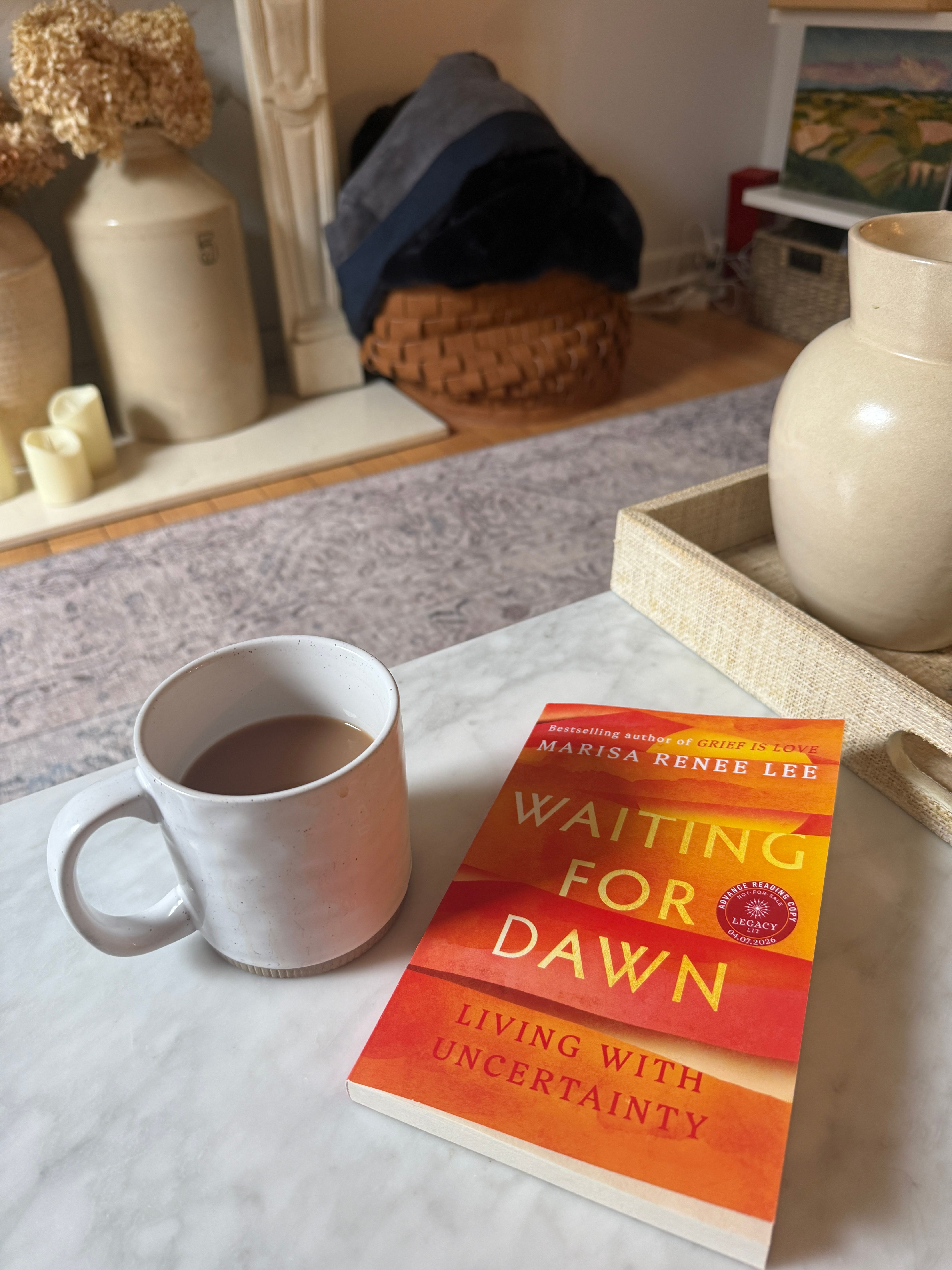
Every time I speak with Marisa Renee Lee or consume her writing I feel less alone. I learn something. I have respect and empathy for her, for myself and for everyone around us and then I learn how to apply that empathy and it's lessons to my life.
Have you seen the trend going around? It looks like something like this…
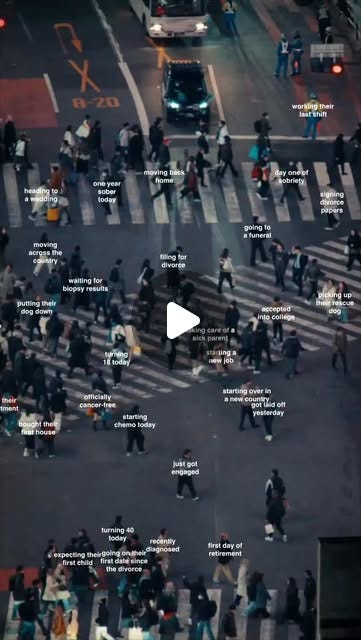
The idea from the instagram trend being that everyone is facing their own uphill battle in their own world, whether we can see it or not. But life doesn’t just stop because you’re going through something. We all have to carry on, no matter what we are carrying.
Marisa’s latest book, Waiting for Dawn, explores the tools and most importantly compassion you need to not only “get through” a tough time of uncertainty, but maintain hope and joy as well.
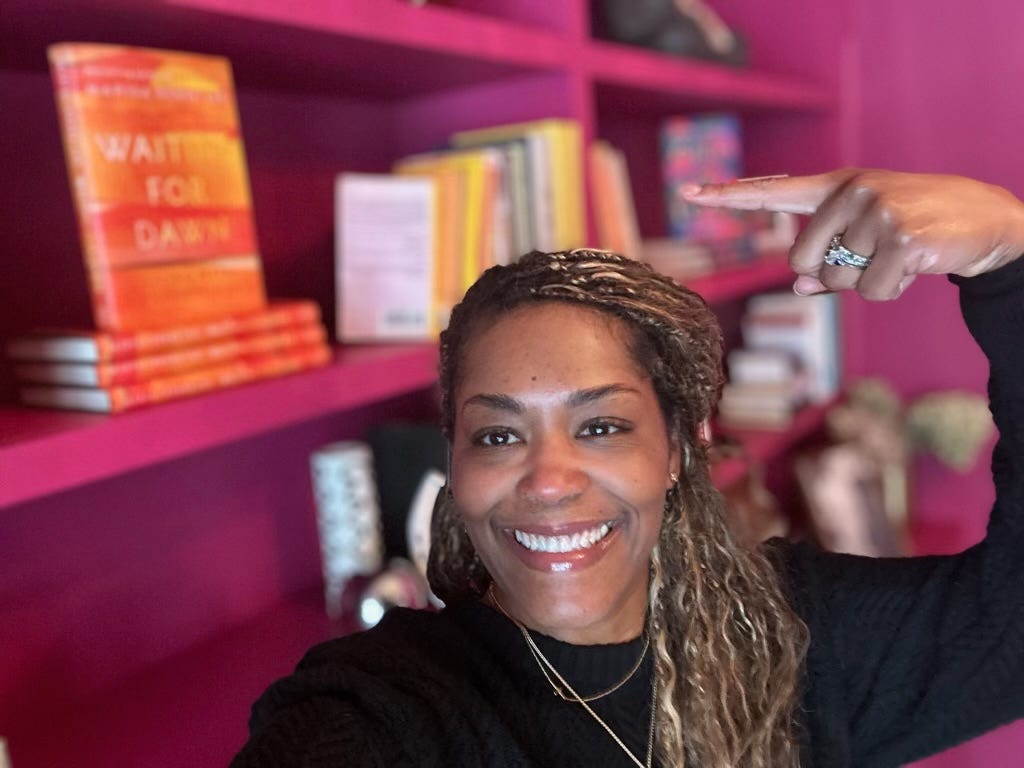
This is the book that I needed when I was diagnosed and going through treatment for breast cancer. I remember being off work for weeks, exhausted beyond belief, looking out from bed, at the world I was once apart of legitimately wondering whether I would ever feel normal and rejoin it. When you’re in the thick of it, whatever it is, it’s hard to remember that dawn lives on the other side.
Relaying her own experience with grief, tragedy and illness, Marisa vulnerably shares her pain while teaching us how to continue to show up for ourselves even in our darkest periods. Because as she writes:
“It never stays dark forever.”
I was so incredibly honored when Marisa asked me to moderate an upcoming book launch discussion at New York City’s famous bookstore, The Strand, on April 6th. We’d love for you to join us!
I asked Marisa a few questions ahead of our chat in April:
(Edited for clarity and length.)
AH: Congratulations! I think this book will help so many people. I know I could have used it a year ago during my surgery recovery. I imagine you needed the sage advice within it while writing it yourself and struggling with chronic illness - is that part of the reason you wrote it?
MRL: “A lot of the advice is stuff I was figuring out in real time. When I did the proposal for this book, I had originally intended for it to be about how to show up for yourself when you are supporting someone else navigating something difficult. A lot of it came from my experience with [my husband] Matt, and the loss of his Mom. Around the same time, my cousin went missing and was later found murdered. So I was thinking a lot about how I needed to show up for myself in order to show up for [every one else]. A few months after that, I got covid and it quickly became long-covid. There were weeks at a time when I could not write at all. And at one point, the summer of 2024, my editor said, I just want you to write about what it feels like to be sick. I sat down and did that for about that for a week and I had over 10,000 words.
It was what I needed to hear in real time as I was dealing with being in pain everyday.”
AH: It must have been quite a feat to find the time and energy to write, research, and interview experts for the book. How did you manage your own illness and care (and parenting!!) while working?
MRL: “One of the biggest things I think is important to talk about is help. I had a lot of free and paid help with this book.
When it came to the research and the experts that I bring into Waiting for Dawn, [I worked with a partner who is an expert in bereavement at Harvard and a friend who is a first reader and editor].
We also had two part-time nannies, and free childcare, from my Dad and my sister.
Having access to free and paid help makes a huge, huge difference.
When you end up in a period of uncertainty, I want you to seek out help.
You cannot do this alone.”
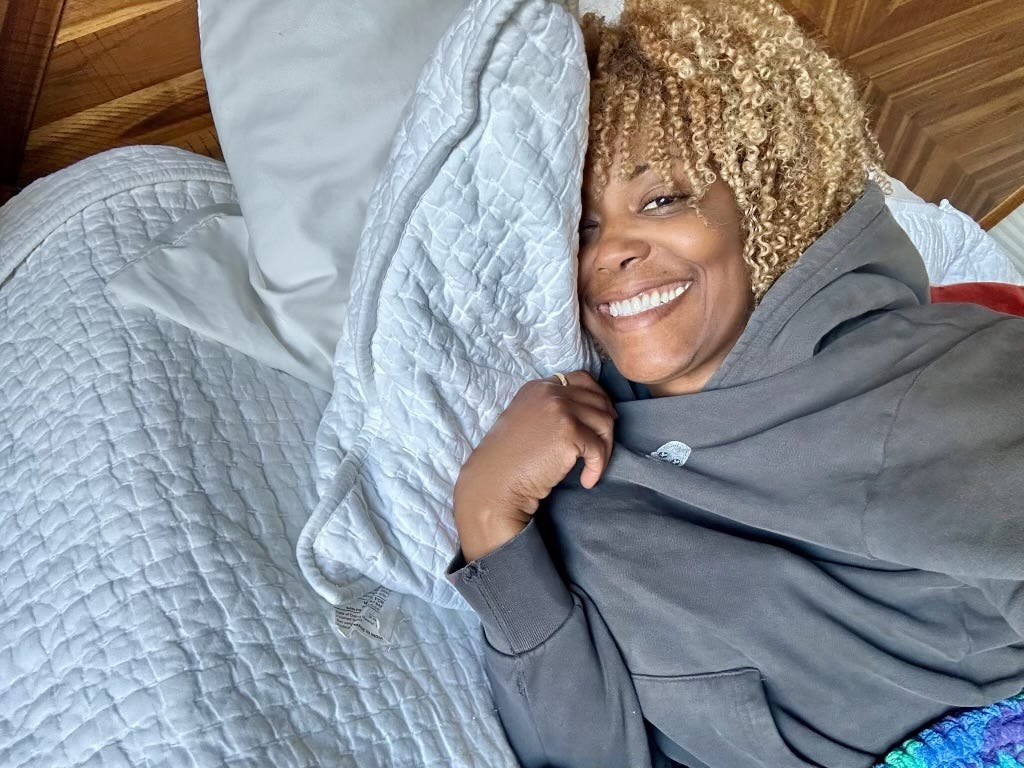
AH: Are you in a period of “dawn” now? Or has your relationship to what “dawn” means changed?
MRL: “I am getting closer to dawn. I am in the twilight morning hours.
My illness is getting better. It’s been a struggle the last few months. But there are so many more things I can do now than I couldn’t do before. We are getting there but not quite there yet. I’m just trying to be patient with the process.”
AH: In my own health journey, I’ve grieved the life I had before breast cancer. Your first book gave us the beautiful idea that “Grief is Love”... I wonder if you applied that line of thinking to life’s challenges for this book. This time, you are grieving the body and life that you thought you should be living while in a period of health challenges?
MRL: “I think it’s really important that people take the time and space to grieve who they were and also whatever their expectations were for this season of life that may have been sidelined by some form of illness. I think it’s very important for people to face it directly and figure out to reckon with the grief that comes. It’s real.
But I also know that grief of any kind is a transformative experience. There is no going back. You are different now. You view things in life differently based on the things that have happened to you. I think it’s important for people to not spend time trying to go back. In the book, I define the period of uncertainty as gray grief.
With gray grief, it is your life, that is the grief itself. Figuring out how to live well amidst whatever uncertainty you’re navigating is essential.”
AH:What is your biggest piece of advice for anyone who is waiting for their dawn?
MRL: Be honest about what it is that you’re dealing with. I was in denial and that made the situation much worse.
Maintaining a commitment to hope, you need to believe that there is better than what you are experiencing today.
“Hope is what pushes us forward to the dawn that we are waiting for.”
AH: You are so generous sharing your life’s challenges and triumphs and everything in between to not only heal yourself but also help others. As someone who is writing their way through their own story, what is your biggest piece of advice for me?
MRL: “Therapy! Lots of tissues. Maybe some wine or whiskey (haha). But seriously, therapy.
When you write you’re own story, you’re writing it to be useful for someone else. You are excavating the most uncomfortable and painful things and then putting them together in a coherent way. Therapy has been a big part of my journey and experience as a writer.
Take breaks. Make space for joy. Rest. Care. All of those things matter a lot.
Writing requires restoration. It’s not something you can just grind out.”
*****
Marisa, thank you for so generously sharing your world and your words with us. I am so excited to continue the discussion at The Strand on April 6th! and hope to see some “Headliners” there! (I just made that up - what do we think? haha)
With love,
Alison
I definitely think I will check out her book. I could use that type of insight right now. Also, I really wish I could get into the city for the event. Unfortunately, Monday’s are hard for me. One of these times I’ll get to one and we can finally meet! Keep us updated on any upcoming events you’re hosting!
What a beautiful interview and reflection! Thank you Allison for sharing